
Navratri is not just a festival—it is a journey of awakening, refining, and directing your inner energy. After stabilizing the body and energy system on Day 1, the second and third days guide us toward discipline (Tapasya), inner control, and transformation.
🕊️ Day 2: Maa Brahmacharini — The Goddess of Tapasya & Stability
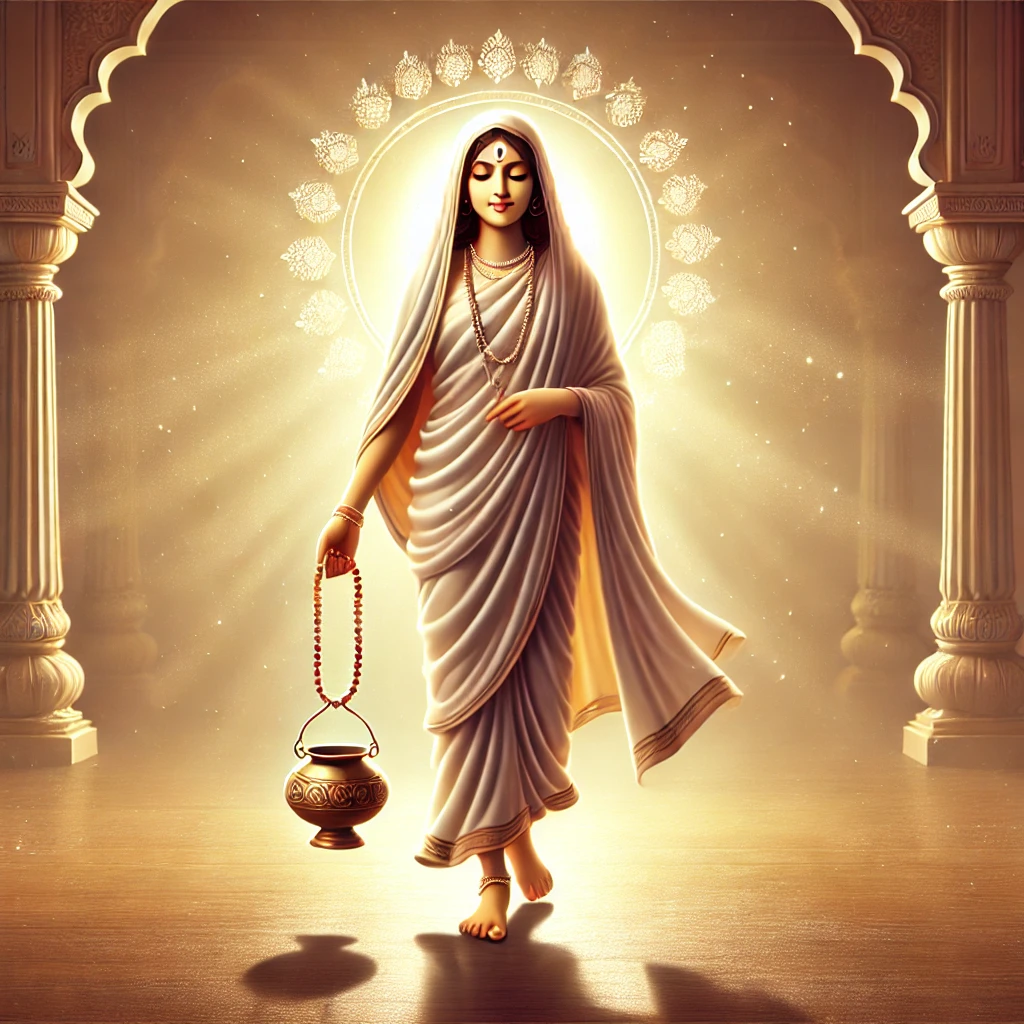
Maa Brahmacharini represents penance, discipline, and unwavering focus. Her calm expression and barefoot journey symbolize a seeker’s readiness to face hardships for spiritual growth.
✨ Deeper Meaning:
- Barefoot Walk: Grounding with Earth and acceptance of reality
- White Attire: Purity, simplicity, and minimal distraction
- Jap Mala: Repetition that builds concentration and mental stability
- Kamandal (Water Pot): Control over emotions and balance of the water element (Swadhisthana Chakra)
👉 At this stage, energy is not scattered—it is conserved and centered
Just like white light: before dispersion, it holds all colors within it.
🔸 In this state:
- Senses are not distracted outward
- Mind is focused inward
- Energy is being refined through Tapasya (discipline)
🔔 Day 3: Maa Chandraghanta — The Awakening & Dynamic Energy
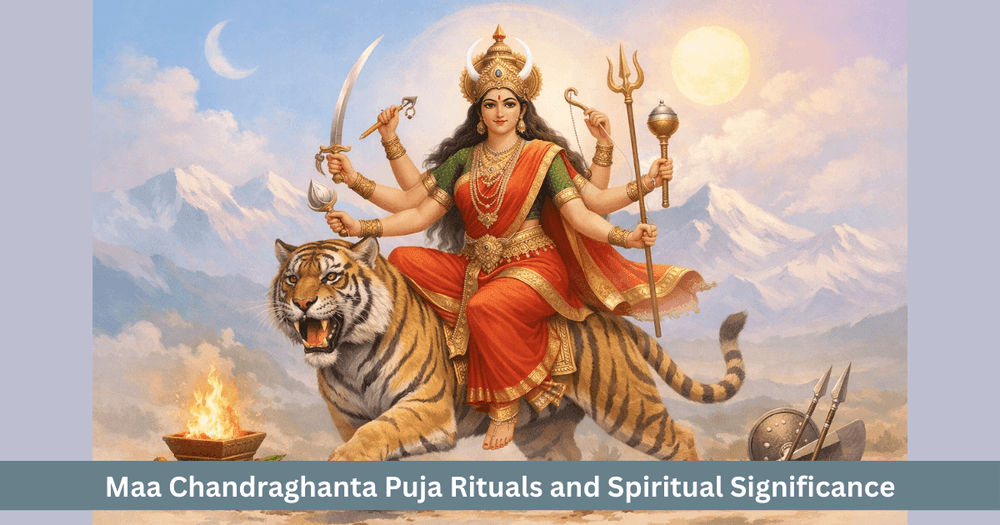

On the third day, energy becomes active, responsive, and transformative. Maa Chandraghanta represents this awakened power.
🔥 Symbolism Explained:
- Crescent Moon (Bell Shape): Harmony of mind and cosmic sound (Naad)
- Trishul: Balance of past, present, future and Ida–Pingala–Sushumna energies
- Sword (Khadga): Cutting ego and false identities
- Bow: Focus, intention, and direction of energy
- Gada (Mace): Strength, stability, and decisiveness
- Lotus: Spiritual awakening and potential
👉 Her vehicle, the Lion, symbolizes:
Complete control over instincts and aggression
⚡ Spiritual State:
- The restless mind becomes rhythmic and aligned
- Energy flows with direction and purpose
- The Manipura Chakra (yellow energy center) activates, guiding power into action
🔱 Essence of the First 3 Days (Durga Energy)
The first three days of Navratri are dedicated to Durga Shakti, representing:
- Stability (Grounding)
- Purification (Inner Cleansing)
- Activation (Energy Awakening)
👉 This journey teaches:
- First, stabilize yourself
- Then purify your inner energy
- Finally, direct it with purpose
🌺 Conclusion
Navratri is an inner transformation process.
Maa Brahmacharini teaches discipline and patience,
while Maa Chandraghanta awakens strength and purposeful action.
✨ When energy is disciplined, it becomes a force of creation, clarity, and transformation.
🙏 Har Har Mahadev | Jai Mata Di
.jpg)
.jpg)
